You cannot out-discipline a sleep deficit. Sleep optimization is the single highest-leverage move in the Health Protocol, because every other system you build runs on it. Skip it, and your focus, willpower, and recovery all collapse. This guide shows you how to sleep better using light, timing, and a simple wind-down routine. No supplements required to start.
Why Sleep Runs Your Focus and Willpower
Sleep is not downtime. It is when your brain and body do their most important work. While you sleep, your brain files the day's memories, clears metabolic waste, and rebuilds the systems that control attention and mood. Researchers found that the brain's clearance system runs far more actively during sleep than while you are awake. Short the sleep, and the cleanup never finishes.
The part of your brain that pays the highest price is the prefrontal cortex. That is your command center for deep work, planning, and self-control. When it runs short on sleep, you get distracted faster and reach for cheap dopamine instead of hard focus. Discipline does not fail because you are weak. It fails because the hardware is starved.
The data is blunt. In a landmark study, people limited to 6 hours in bed for two weeks performed as badly on attention tests as people who had stayed awake for two full nights. The worst part: they did not feel that impaired. Sleep debt is a silent tax on everything you are trying to build with discipline.
The Sleep Optimization Protocol
You do not fix sleep with one gadget. You fix it with a sequence. Run these five steps in order. The first two cost nothing and deliver the biggest return.
1. Anchor Your Wake Time
Pick one wake time and hold it every day, weekends included. Your body clock craves a fixed anchor. A steady wake time trains your system to feel sleepy at the same hour each night, so falling asleep stops being a battle. This single habit does more than any sleep tracker.
2. Get Morning Light
Within an hour of waking, get 10 minutes of outdoor light. Morning light is the strongest signal your circadian rhythm receives. It sets a timer that tells your brain when to release melatonin roughly 16 hours later. Cloudy days still work, since outdoor light is far brighter than any indoor bulb.
3. Cut Caffeine Early
Caffeine has a long tail. Half of it can still be in your system 5 to 6 hours after the cup. An afternoon coffee can quietly steal your deep sleep even if you fall asleep fine. Set a hard cutoff by early afternoon. Treat caffeine like a tool with a timer, not a default.
4. Build a Wind-Down Hour
Your brain needs a runway to land. For the 60 minutes before bed, dim the lights and put the screens away. Bright light at night tells your brain it is still daytime and blocks melatonin. Replace the scroll with something low-stimulation: reading, stretching, or a hot shower that drops your core temperature afterward.
5. Set the Environment
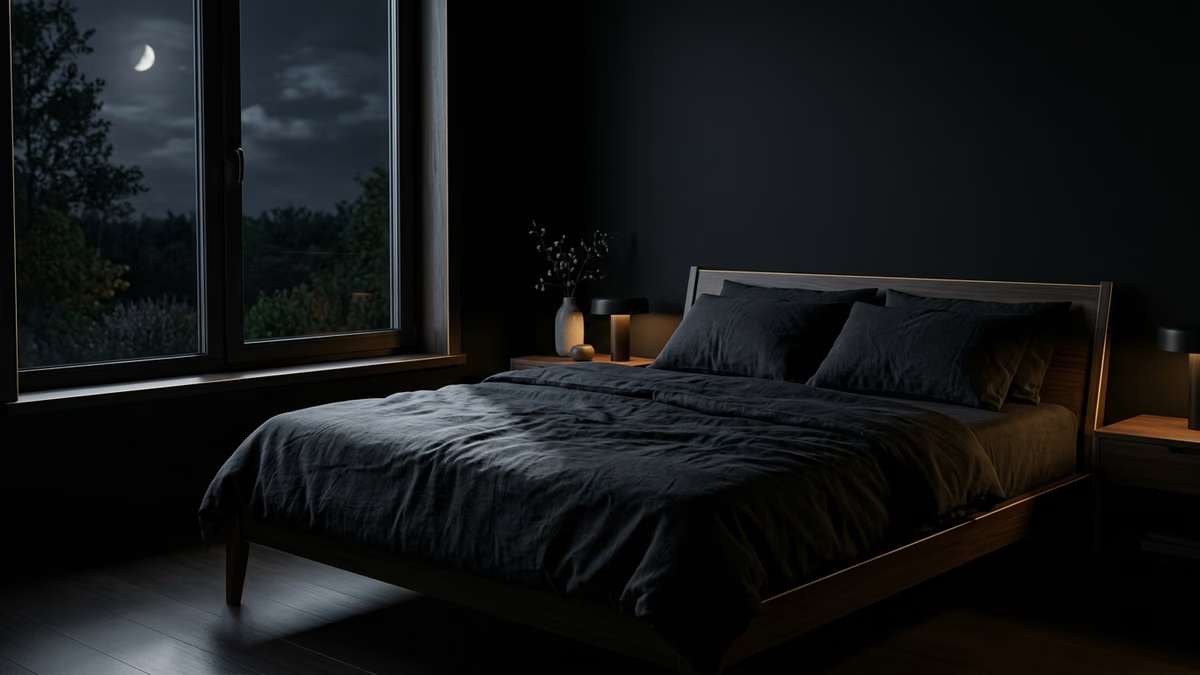
Make the room cool, dark, and quiet. Aim for around 18 degrees Celsius, or 65 degrees Fahrenheit. Your core temperature has to drop to fall asleep, so a cooler room helps. Block light with curtains or a mask, and mute notifications. The bedroom is for sleep, not for work or feeds.
What Better Sleep Actually Changes
Optimized sleep is a force multiplier. With a full night behind you, focus comes easier, your mood holds steady under pressure, and your training and nutrition finally pay off. Sleep is when muscle repairs and hunger hormones reset, which is why poor sleep sabotages your balanced lifestyle and your appetite control.
The reverse is also true. The U.S. Centers for Disease Control reports that about 1 in 3 adults fall short on sleep. That gap shows up as foggy mornings, weak willpower, and slower recovery. You do not need more hustle. Often you just need to defend the 8 hours that make the other 16 work. If you have the basics in place, targeted supplements like magnesium can add a small final edge.
The Lock In Protocol
Treat sleep like engineering, not luck. Set your wake time as a non-negotiable, then build the inputs backward from it: morning light, an early caffeine cutoff, a wind-down hour, and a cool dark room. Run the system for two weeks before you judge it. Track how you feel, adjust one variable at a time, and protect the schedule the way you would protect a deep work block. Don't grind through exhaustion. Recover with precision.
Key Takeaways
- Sleep optimization is the base layer. Focus, willpower, and recovery all depend on it.
- Most adults need 7 to 9 hours. Very few people truly thrive on less.
- Fix your wake time first. A fixed wake time anchors the whole circadian rhythm.
- Light and timing beat gadgets. Morning light and an early caffeine cutoff do the heavy lifting.
- Sleep debt is a silent tax. You often feel fine while your performance quietly drops.
Frequently Asked Questions
How many hours of sleep do I actually need?
Most adults need 7 to 9 hours of sleep per night, according to the National Sleep Foundation. A small number of people feel fine on slightly less, but very few thrive on under 7 hours. If you wake without an alarm and stay sharp through the afternoon, you are likely getting enough.
What is the fastest way to start sleeping better?
Fix your wake time first. Sleep optimization starts with a fixed wake time every day, even on weekends. A stable wake time anchors your circadian rhythm, which makes falling asleep at night easier within a week.
Does catching up on sleep at the weekend work?
Only partly. Weekend recovery sleep can ease short-term tiredness, but it does not fully reverse the focus and mood costs of sleep debt built up across the week. A consistent schedule beats a weekday deficit followed by a weekend binge.
Why does poor sleep wreck my focus and willpower?
Sleep restores the prefrontal cortex, the part of the brain that runs attention, planning, and self-control. When you are short on sleep, that system runs weak. You get distracted faster, react more emotionally, and reach for easy dopamine instead of deep work.
What room temperature is best for sleep?
A cool room around 18 degrees Celsius, or 65 degrees Fahrenheit, suits most people. Your core temperature needs to drop slightly to fall asleep, so a cooler room helps you drift off and stay in deep sleep longer.
References
- Recommended sleep duration of 7 to 9 hours for adults (National Sleep Foundation, Hirshkowitz et al., 2015)
- Chronic sleep restriction causes cumulative attention deficits (Van Dongen et al., 2003, Sleep)
- Sleep drives the brain's clearance of metabolic waste (Xie et al., 2013, Science)
- Caffeine taken 6 hours before bed disrupts sleep (Drake et al., 2013, Journal of Clinical Sleep Medicine)
- More than 1 in 3 adults sleep less than 7 hours a night (U.S. Centers for Disease Control, MMWR 2016)
- Practical sleep hygiene tips on light, temperature, and routine (Mayo Clinic)

