
You do not have a willpower problem. You have a systems problem.
Most people treat their health like a lottery. They hope they will feel good. They hope they will lose weight. They grind for three weeks, burn out, and crash. This happens because they rely on motivation instead of protocol.
To achieve a balanced life, you must stop treating your body like a mystery. You must treat it like a machine. A machine needs specific inputs to function. It needs a maintenance schedule. It needs a feedback loop.
This post outlines that system. It is not about starving yourself. It is about "locking in" a routine that makes feeling great the default setting.
Pillar 1: The Input (Sustainable Activity)
The first step to a balanced life is redefining your relationship with exercise. The "grind" mentality often leads to failure. If you hate your workout, you will eventually quit.
The goal is consistent, fun, physical activity.

Consistency Beats Intensity
You do not need to train like an Olympian to be healthy. You just need to show up. A moderate workout done fifty times is better than a brutal workout done twice.
Find something you enjoy. This could be:
- Lifting weights
- Running or jogging
- Hiking
- Playing a sport
If it is fun, you will do it. If you do it, you build the habit.
The Maintenance Mindset
When you are in a maintenance phase, your goal changes. You are not trying to destroy yourself in the gym. You are trying to keep the machine running.
- Stick to your physical activity
- Do not let low energy stop you
- Keep moving to prevent weight rebound
Pillar 2: The Constraint (The 5 Standards)
Nutrition is usually where things fall apart. People overcomplicate it. They track every crumb or they eat nothing but air.
Keep these five standards in mind for most meals. You do not need to be perfect.
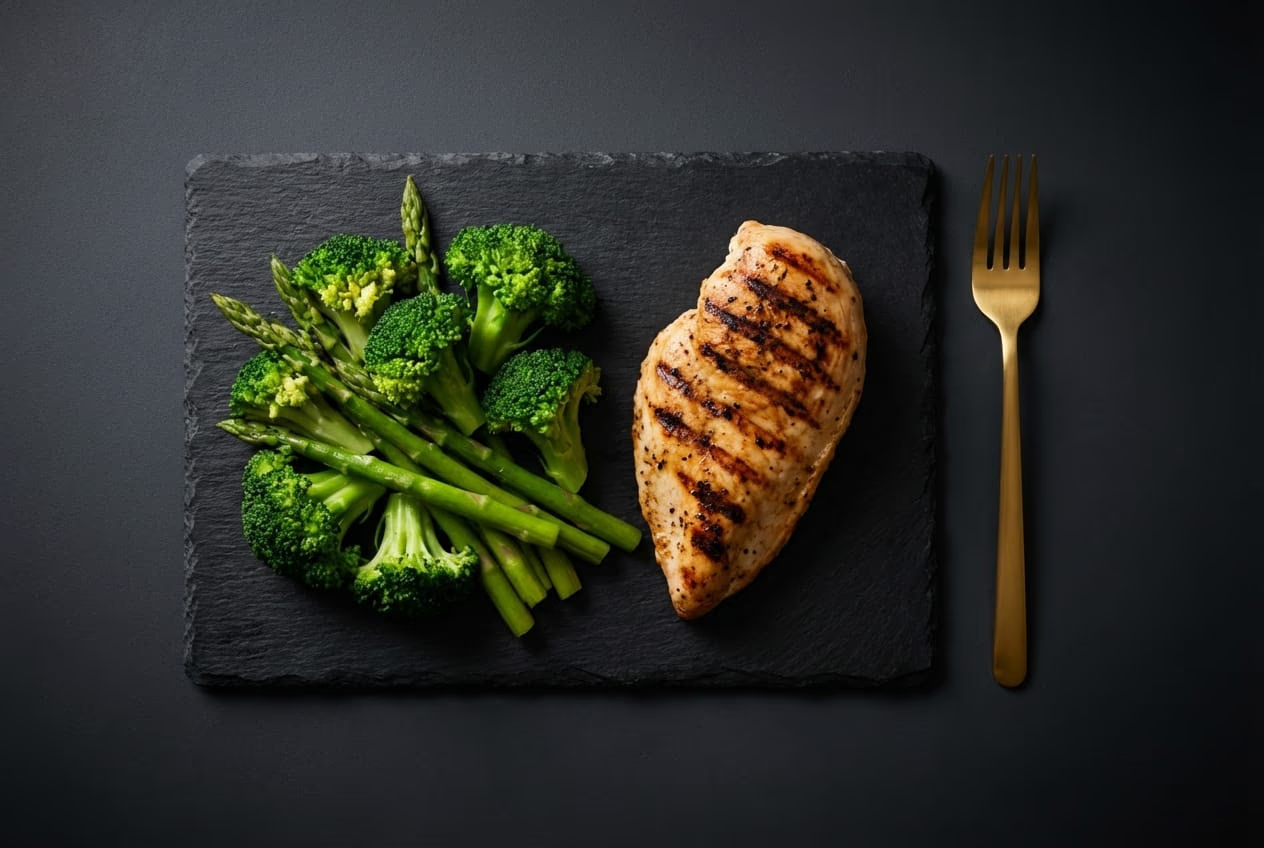
1. Prioritize Lean Protein
Every meal starts here. Aim for a portion the size of your fist.
- Good sources: Chicken, fish, eggs, turkey, lean beef
- Avoid: Processed meats like bacon or sausage
2. Load Up on Veggies
Vegetables provide volume and nutrients. They keep you full.
- Portion: 1 to 4 fists per meal
- Prep: Grilled, steamed, or raw are all okay
3. Smart Carbs and Fats
You need energy. Whole grains and healthy fats are fuel, not the enemy.
- Carbs: Oats, whole grain bread, quinoa, fresh fruit
- Fats: Nuts, avocado, olive oil
- Rule: If you have high energy needs, increase these. If you are sedentary, lower them.
4. Standardize the Schedule
Your body loves rhythm. Eating at random times causes energy crashes.
- Frequency: Eat 3 to 5 meals per day
- Timing: Stick to a similar schedule (e.g., 7am, 1pm, 6pm)
- Simplicity: Cook in bulk. Mix your protein, veggies, and carbs in advance.
5. Hydration and Support
Water is a non-negotiable.
- Target: Aim for 1.5 liters a day plus a glass with every meal
- Supplements: These are not magic, but they help fill gaps. Consider a multivitamin, Vitamin D, or Fish Oil if your diet varies.
Pillar 3: The Feedback Loop (The Weekly Audit)
This is the most critical part of the protocol. You cannot manage what you do not measure.
A balanced life requires a safety valve. You need a way to catch problems before they become disasters.

The Weekly Check-In
Do not weigh yourself every hour. It creates anxiety. Instead, check your bodyweight once or twice a week.
This number is data. It tells you if your system is working.
The Correction Algorithm
When you step on the scale, you will see one of two things:
- The weight is normal: Great. Keep doing what you are doing. Enjoy your fun physical activity. Eat your healthy meals.
- The weight is high: Do not panic. Do not starve yourself. Execute the correction protocol.
The Correction Protocol:
- For one week, strictly eat healthy foods
- Slightly reduce your carbs and fats
- Cut out the "junk" treats (normally allowed 2-3 times a week)
- Re-check in seven days
This prevents you from waking up ten pounds heavier a month later. You catch the drift early, you correct it, and you move on.
The Outcome: Sustainable Weight Maintenance
The goal of this system is simple. You want to feel great. You want the habit of eating well to feel automatic.
When you follow this protocol, you enter a state of "Living in Balance." You are not constantly dieting. You are not binge eating. You are simply operating your machine correctly.
Healthy Habits for the Long Haul
Remember that maintenance gets harder after weight loss. Your hunger might go up. Your energy might go down. This is why the system matters.
If you rely on how you "feel" in the moment, you will eat junk. If you rely on the protocol, you will eat protein and veggies. You will drink your water. You will stay on track.
The 80/20 Reality
You do not have to be a robot. It is fine to eat some junk 2-3 times a week in low amounts. But this is only possible if the other 90% of your life is locked in.
Earn your flexibility through consistency.
Conclusion: The Lock In Protocol
A balanced life is an engineered result. It comes from respecting the inputs and monitoring the outputs.
Here is your Lock In Protocol:
- Standardize Inputs: Build your meals around Protein + Veggies. Hydrate.
- Move Daily: Pick an activity you enjoy and do it consistently.
- Audit Weekly: Weigh yourself. If the number drifts up, tighten the diet for one week.
- Ignore Motivation: Do not wait to "feel" like doing it. Follow the schedule.
Stop guessing. Look at the data. Lock in.
Key Takeaways
- Systems beat willpower. Build a protocol you can follow automatically.
- Consistency beats intensity. A moderate workout done regularly is better than extreme efforts that burn you out.
- Follow the 5 Standards. Protein, veggies, smart carbs/fats, consistent timing, and hydration.
- Weigh yourself weekly. Use the data to catch problems early.
- Execute the correction protocol. One strict week fixes most weight drift.
- Earn flexibility through consistency. The 80/20 rule only works when you are locked in.
Frequently Asked Questions
Yes. The protocol allows for "junk" 2-3 times a week in low amounts. However, if you are in a weight loss phase, you should avoid it completely until you reach your goal.
If you are trying to lose weight and it stalls for two weeks, reduce your daily calories by about 200. Usually, this means slightly reducing your portion of carbs or fats.
Not necessarily. Counting macros is a tool for precision and learning. Once you understand portion sizes (like using your fist for protein), you can switch to the "Living in Balance" approach which relies on food types and weekly weight checks.