
To lose fat without yo-yo dieting, run weight loss in defined phases: cut for a set 6-to-9-week window at roughly a 500-calorie daily deficit, eat mostly whole foods, and when the scale stalls for two weeks, drop another 200 to 400 calories. Then return to maintenance to recover before the next cut.
Most people treat dieting as permanent suffering — starving for months, then bingeing when willpower runs out. A roughly 500-calorie daily deficit is the conventional target for about one pound (0.45 kg) of fat loss per week, the rate most major health bodies consider sustainable. Running it in phases, rather than indefinitely, blunts the metabolic slowdown that makes long diets fail. This is general education, not medical or dietary advice.
The Lock In movement views the body differently. Those who lock in see the body as a machine that requires specific inputs for specific outputs. You should not be dieting forever. You need to structure your life into distinct weight loss phases.
Success comes from knowing when to push and when to maintain. By defining a start and end point for your cut you gain psychological control. You are not starving yourself indefinitely. You are executing a protocol for a set period.
Here is the engineering approach to managing your weight loss phases for maximum results.
Pillar 1: The Healthy Baseline (Maintenance)

The default state of your life should not be a diet. Your goal is to stay in a healthy weight range while fueling your performance. When you are not specifically trying to lose fat you must focus on training intensity.
During this phase you should add plenty of carbohydrates and fats to your meals. These nutrients fuel your workouts and help you build muscle. This is often called the "Training Phase."
- You eat to perform
- You are not hungry
- You have high energy
This phase builds the metabolic engine that burns fat later. If you try to cut calories while training hard for too long you will burn out. Respect the maintenance phase as the foundation of your progress.
Pillar 2: The Cut (6 to 9 Weeks)
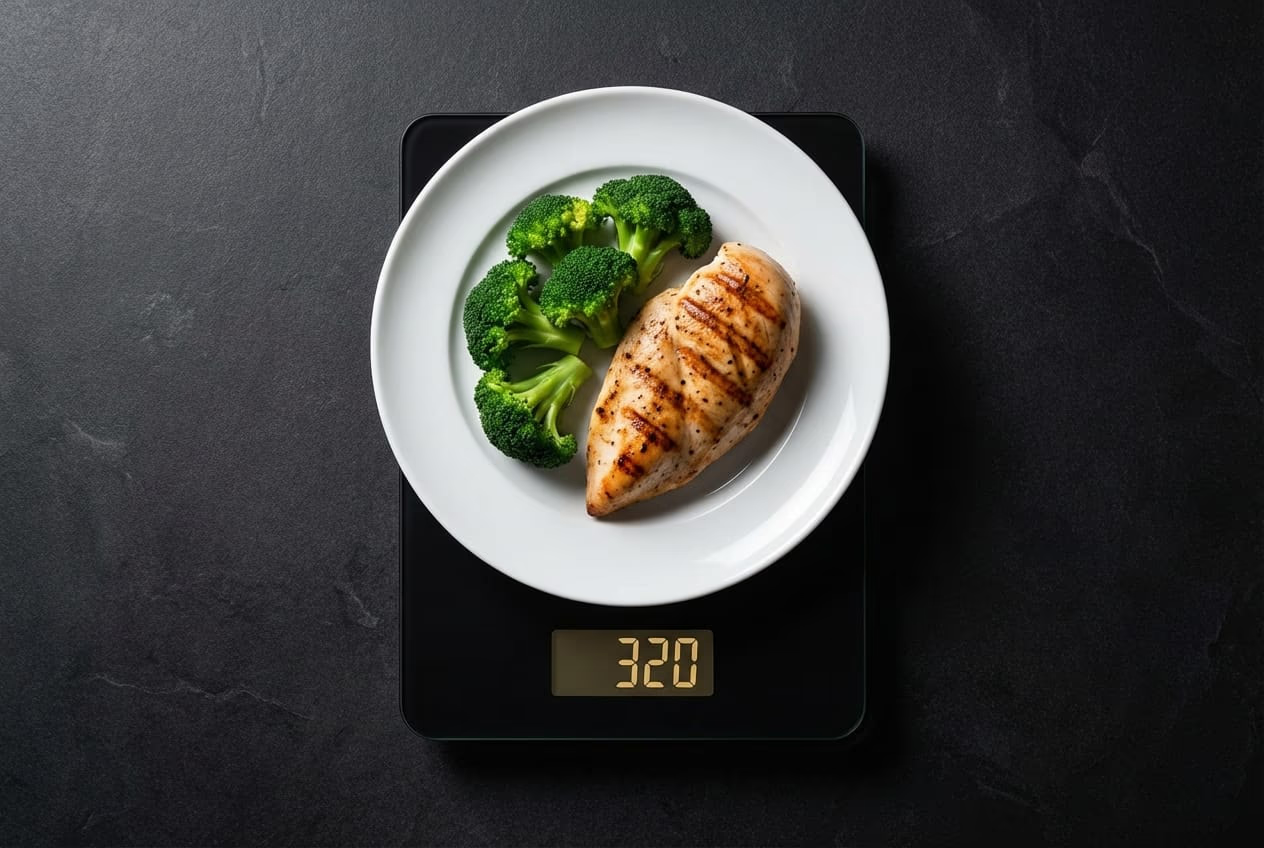
When you decide to drop body fat you must enter a dedicated cutting phase. This is not a vague attempt to "eat better." It is a calculated strike.
The protocol prescribes a strict 500 calorie deficit. This amount is the sweet spot. It is enough to burn fat consistently but not so much that you lose muscle mass. Work out the maintenance figure you are subtracting from with the calorie calculator.
You must stay in this deficit for a specific window of 6 to 9 weeks. This duration is critical:
- Shorter than six weeks yields little result
- Longer than nine weeks leads to diet fatigue and metabolic slowdown
During this time there is one strict rule: NO JUNK food. You have a short window to get results. Do not waste it on empty calories that spike your hunger.
Eat clean whole foods to keep your volume high and your stomach full. This strict adherence defines successful weight loss phases.
Pillar 3: The Adjustment Algorithm

Even with a perfect plan, your body eventually fights back. This is metabolic adaptation (adaptive thermogenesis): as Trexler, Smith-Ryan, and Norton (2014, Journal of the International Society of Sports Nutrition) describe, prolonged dieting reduces energy expenditure by more than bodyweight loss alone would predict, partly through lower leptin and thyroid output. The result: weight loss stalls. Phasing your diet and periodically returning to maintenance is the practical countermeasure.
Do not panic when the scale stops moving. Follow the algorithm:
- Wait and confirm: If your weight stalls for 2 weeks then you act. A stall is not one bad weigh-in. It is fourteen days of zero progress.
- Make a data-driven adjustment: Reduce your daily intake by an additional 200 to 400 calories. This small tweak re-establishes the deficit without requiring a total overhaul.
This systematic adjustment prevents emotional spiraling. You do not quit. You simply update the variables and continue until your 9 week phase is complete.
The Lock In Protocol
Treat your fat loss like a project with a deadline. Do not drift through life hoping to lose weight. Define the window: set a strict timeline of 6 to 9 weeks for your cut. Set the deficit: calculate your maintenance calories and subtract 500. Eliminate variables: eat zero junk food during this phase. Adjust on data: if weight stalls for 2 weeks, drop calories by 200. Stop guessing. Execute the phases. Trust the math.
Key Takeaways
- Dieting should have a finish line. Structure your cuts into 6-9 week phases.
- 500 calories is the sweet spot. Enough to lose fat, not enough to lose muscle.
- Maintenance is not failure. It builds the metabolic engine for your next cut.
- Plateaus are expected. Wait 2 weeks, then adjust by 200-400 calories.
- Zero junk during cuts. High volume whole foods keep you full and on track.
Frequently Asked Questions
Why should weight loss phases only last 6 to 9 weeks?
Your body attempts to adapt to low calories by slowing down your metabolism. Limiting your diet phase to 6 to 9 weeks prevents this adaptation from becoming severe. It also gives you a psychological finish line. It is easier to be strict when you know the diet ends in a few weeks.
Can I eat junk food if it fits my calories?
The protocol advises against this. Junk food is calorie dense and low in nutrients. Eating it makes you hungry and increases the likelihood of binging. During your weight loss phases you need high volume foods like vegetables and lean meats to keep you full. Save the treats for your maintenance phase.
What exactly is a 500 calorie deficit?
A 500 calorie deficit means eating 500 calories less than your body burns in a day. Work out what your body burns with the calorie calculator. For most people this results in losing about one pound of fat per week. It is considered the gold standard for sustainable fat loss because it preserves muscle tissue while burning fat.
References
- Trexler, E. T., Smith-Ryan, A. E., & Norton, L. E. (2014). Metabolic adaptation to weight loss: implications for the athlete. Journal of the International Society of Sports Nutrition, 11, 7.
- Losing weight: aim for 1–2 pounds per week (US Centers for Disease Control and Prevention)
- Cutting about 500 calories a day to lose about half a pound to 1 pound a week (Mayo Clinic)
- Calorie Deficit: A Complete Guide (WebMD)
- Getting past a weight-loss plateau (Mayo Clinic)
- Is starvation mode real? Adaptive thermogenesis explained (Healthline)