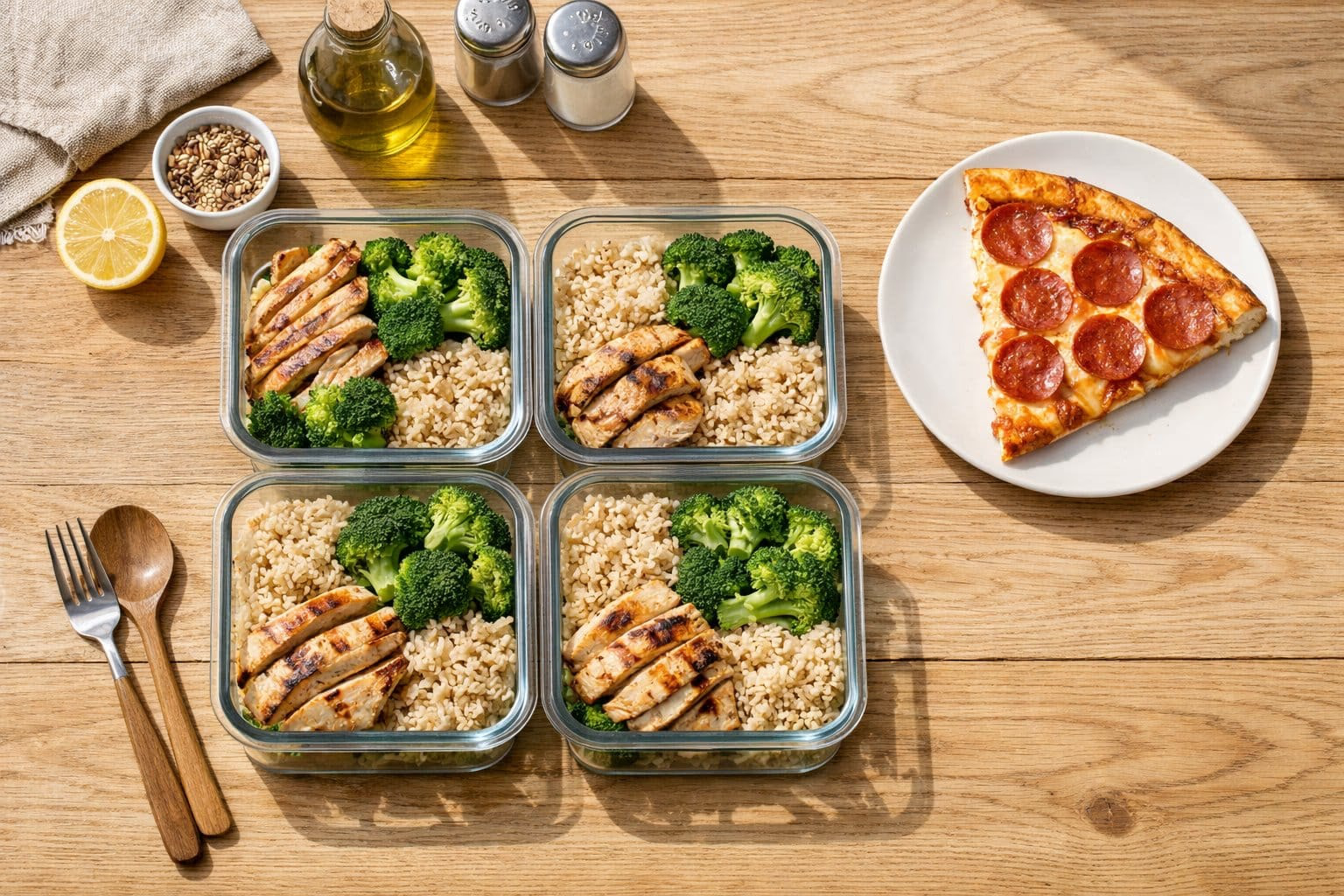
A basic healthy eating plan works in this order: set your calories to match your goal, eat lean protein at every meal, fill most of the plate with vegetables, fruit, and whole grains, choose healthy fats, and follow the 80/20 rule so the plan stays flexible enough to keep for years.
Nutrition advice is confusing: one expert says "no carbs," another says "eat only meat." The noise hides a simple, well-evidenced structure. This guide lays out a basic healthy eating plan grounded in published research — the kind of flexible approach that, as Westenhoefer et al. (1999, International Journal of Eating Disorders) found, is linked to a lower BMI and a higher chance of successful weight loss than rigid, all-or-nothing dieting. This guidance is general education, not personalized medical advice.
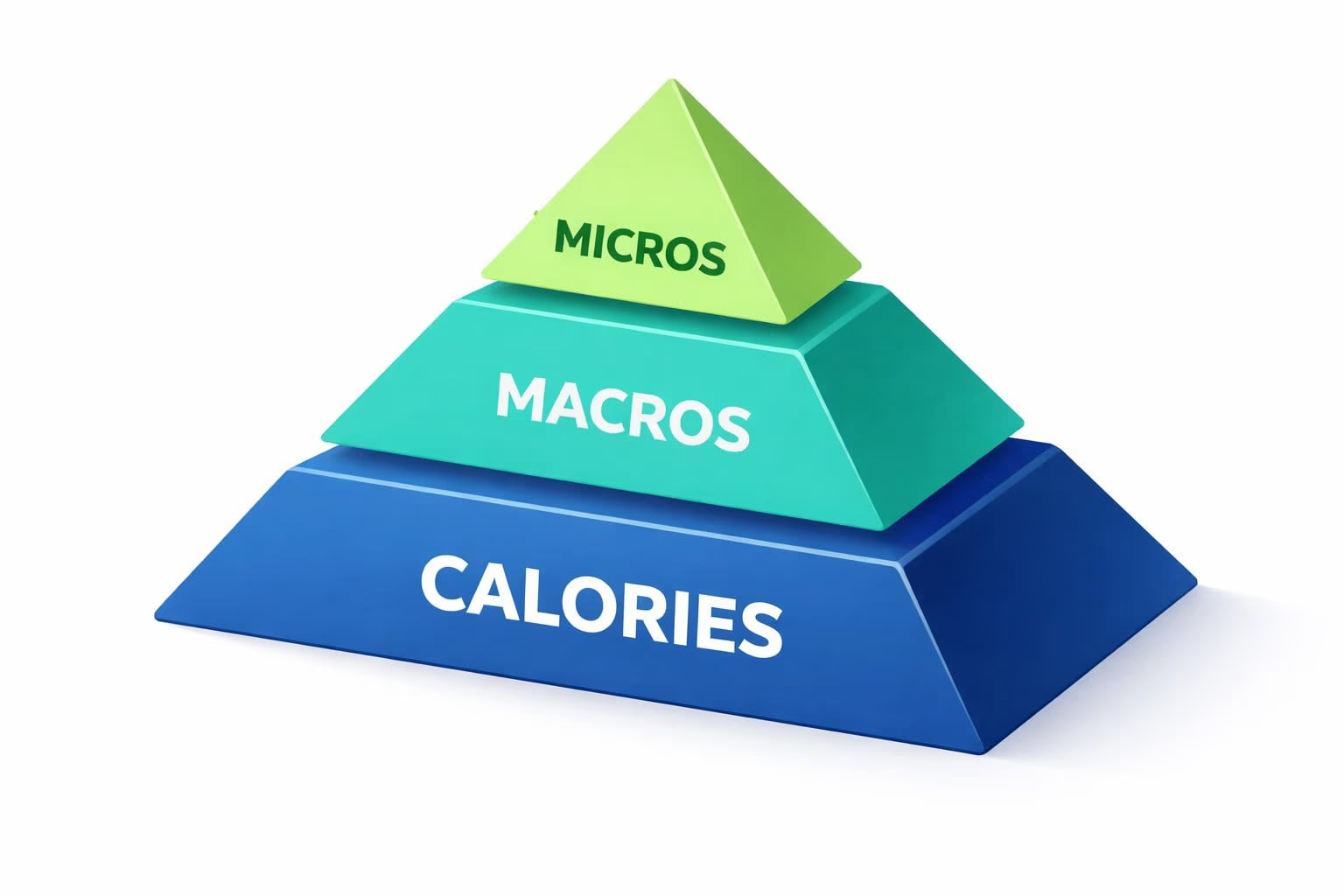
The Nutrition Hierarchy: What Matters Most
The biggest factor in any basic healthy eating plan is Calories.
Whether you want to lose fat or build muscle, calories are the key. Think of calories as your energy budget:
- Eat more than you burn → you gain weight
- Eat less than you burn → you lose weight
This is true no matter what specific foods you eat.
Does Food Quality Matter?
Yes, absolutely. Calories are the biggest factor, but the type of food is the second biggest factor.
If you only count calories but eat junk, you will feel terrible. Healthy foods help in two ways:
- They naturally lower your calorie intake
- They make you feel full longer
This makes it easier to stick to your goals without starving yourself.
Calorie Calculator: Find Your Starting Number
Calories come first, so start with a number instead of a guess. This uses the Mifflin-St Jeor equation, the most accurate of the common resting-energy formulas, then adjusts for how much you move.
Protein target: 128–176 g per day, spread across your meals.
These are estimates, not prescriptions. Real energy needs vary by roughly 10 percent either way. Eat at the number for two to three weeks, track your weight, and adjust from what actually happens on the scale.
Pillar 1: Lean Protein
Protein is the king of nutrients. It helps your body in three big ways:
- It protects muscle: When you diet, you want to lose fat, not muscle. Higher-protein intakes help preserve lean body mass during a calorie deficit.
- It burns calories: Your body uses more energy to digest protein than fat or carbs. The thermic effect of protein is roughly 20–30 percent of the calories consumed, versus about 5–10 percent for carbohydrate and 0–3 percent for fat (Calcagno et al., 2019, Journal of the American College of Nutrition).
- It kills hunger: Protein is the most satiating macronutrient, which can naturally reduce how much you eat later in the day (Halton & Hu, 2004, Journal of the American College of Nutrition).
What to Eat: Focus on chicken, fish, eggs, dairy, turkey, and beef.
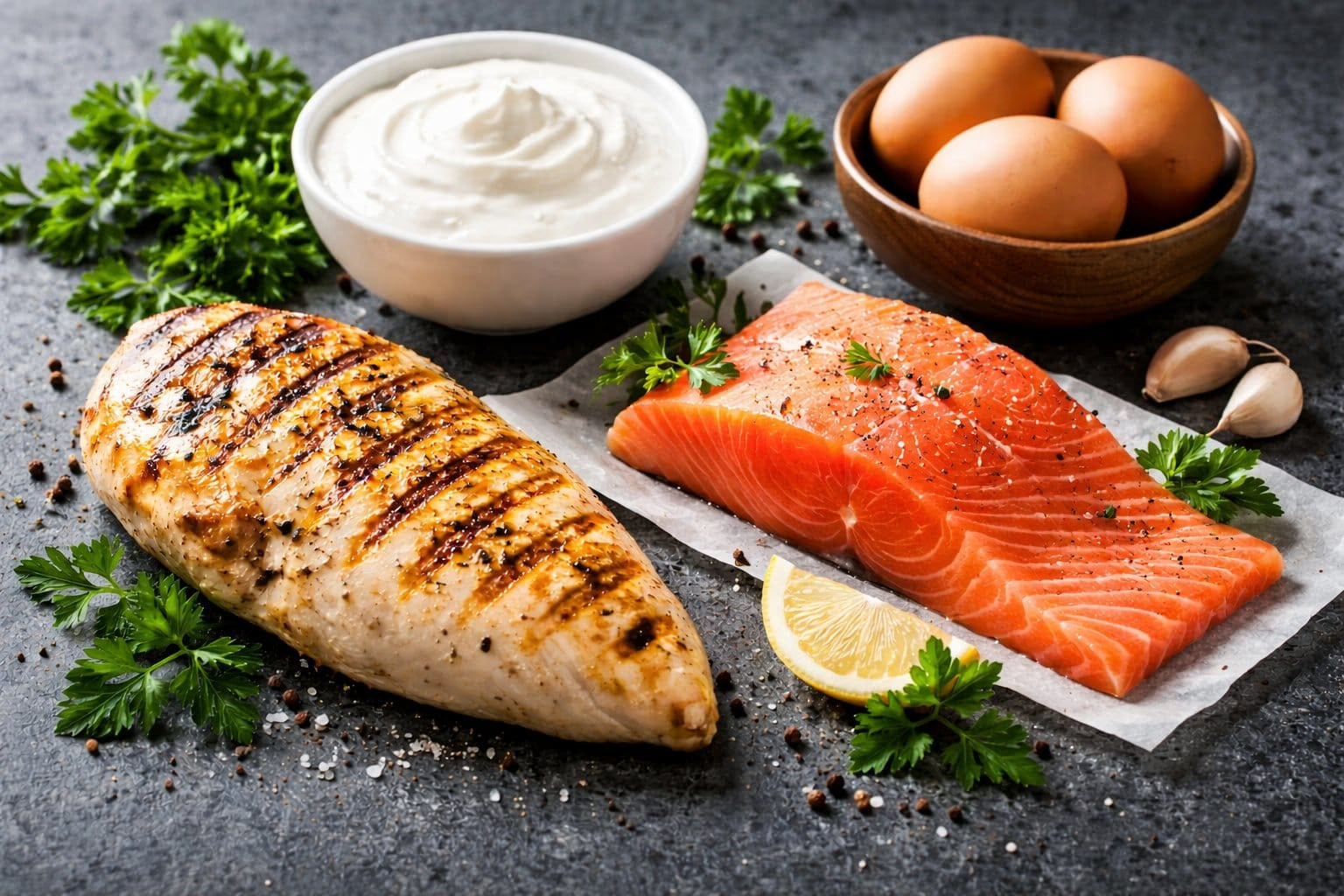
Pro Tip: Your meat doesn't have to be "super" lean. Just avoid meats that are mostly fat. Try to avoid processed meats like bacon, sausage, and salami.
Pillar 2: Healthy Carbs
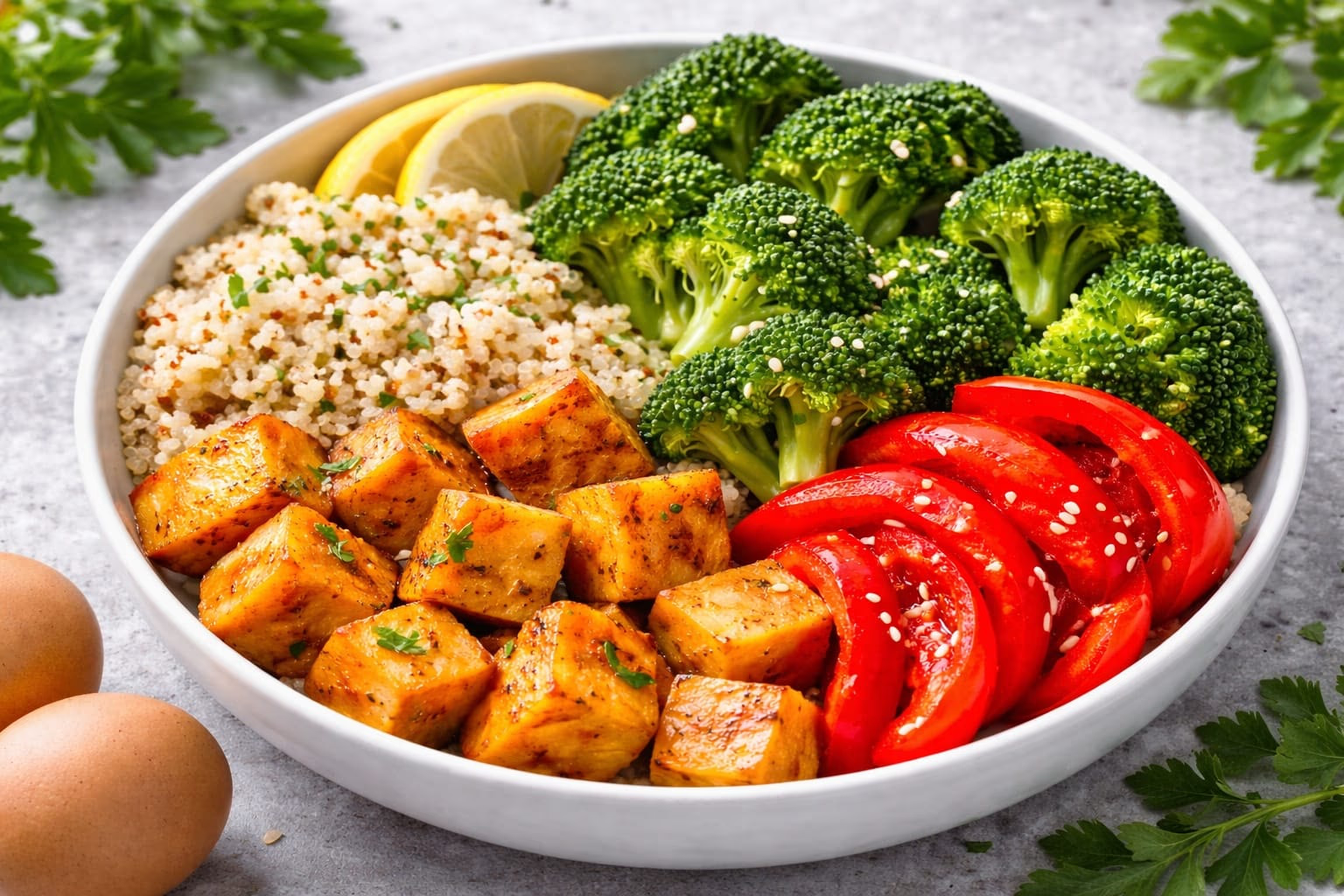
Carbs are not the enemy. They are your body's main fuel source. A basic healthy eating plan includes carbs that give you energy and vitamins.
- Veggies: Eat a variety of colors.
- Fruits: Great for snacks.
- Whole Grains: These keep you full longer.
- Sugary drinks (diet soda is fine)
- Processed treats like cake and cookies
- Foods high in both sugar and fat
These add a lot of calories without making you feel full.
Pillar 3: Healthy Fats
Fat is essential for your brain and hormones. But not all fats are created equal. You want to focus heavily on monounsaturated fats.
- Olive oil
- Canola oil
- Natural nut butters
- All nuts
- Avocados
- Too much animal fat (like lard)
- Trans fats (found in fast food and cheap snacks)
Trans fats are bad for your heart and offer no health benefits.
The Lock-In Mindset: Progress, Not Perfection
Many diets fail because they are too strict. They tell you to cut out all your favorite foods. This usually leads to giving up.
The Lock In philosophy takes a different approach. The goal is simply to eat MORE healthy foods. It is not about eating zero unhealthy foods.
The 80/20 Rule
Flexible diets tend to work better than rigid ones. In a large validation study, Westenhoefer, Stunkard, and Pudel (1999) found that flexible control of eating was associated with lower disinhibition, a lower BMI, and a higher probability of successful weight reduction, whereas rigid all-or-nothing control was linked to more frequent binge episodes. If 80 percent of your food is healthy, you have room for fun foods without triggering that collapse.
- Eating pizza 2-3 times a week is fine.
- Eating ice cream is okay in small amounts.
- Fast food is an option when you are busy.
It is fine to eat some junk 2-3 times a week in low amounts. This stops you from feeling deprived. It helps you stay consistent for months and years, not just weeks.
Practical Implementation: How to Start
You don't need to change your whole life overnight. Start small to build a basic healthy eating plan that lasts.
Week 1-2: Add, Don't Subtract
Don't worry about cutting foods yet. Just try to eat protein at every meal. Add one extra serving of vegetables each day. Drink water instead of one sugary soda. Small wins build momentum.
Week 3-4: Check Your Baseline
Track what you eat for a few days. Don't judge yourself. Just see how many calories you are actually eating. Once you know your number, you can adjust it slightly to reach your goals. Our full calorie calculator page walks through the equation behind that estimate and when to recalculate it. Learn more in our macro tracking guide.
Ongoing: Keep it Simple
Use simple meal templates:
- Breakfast: Protein + Fruit.
- Lunch: Protein + Veggie + Rice.
- Dinner: Protein + Veggie.
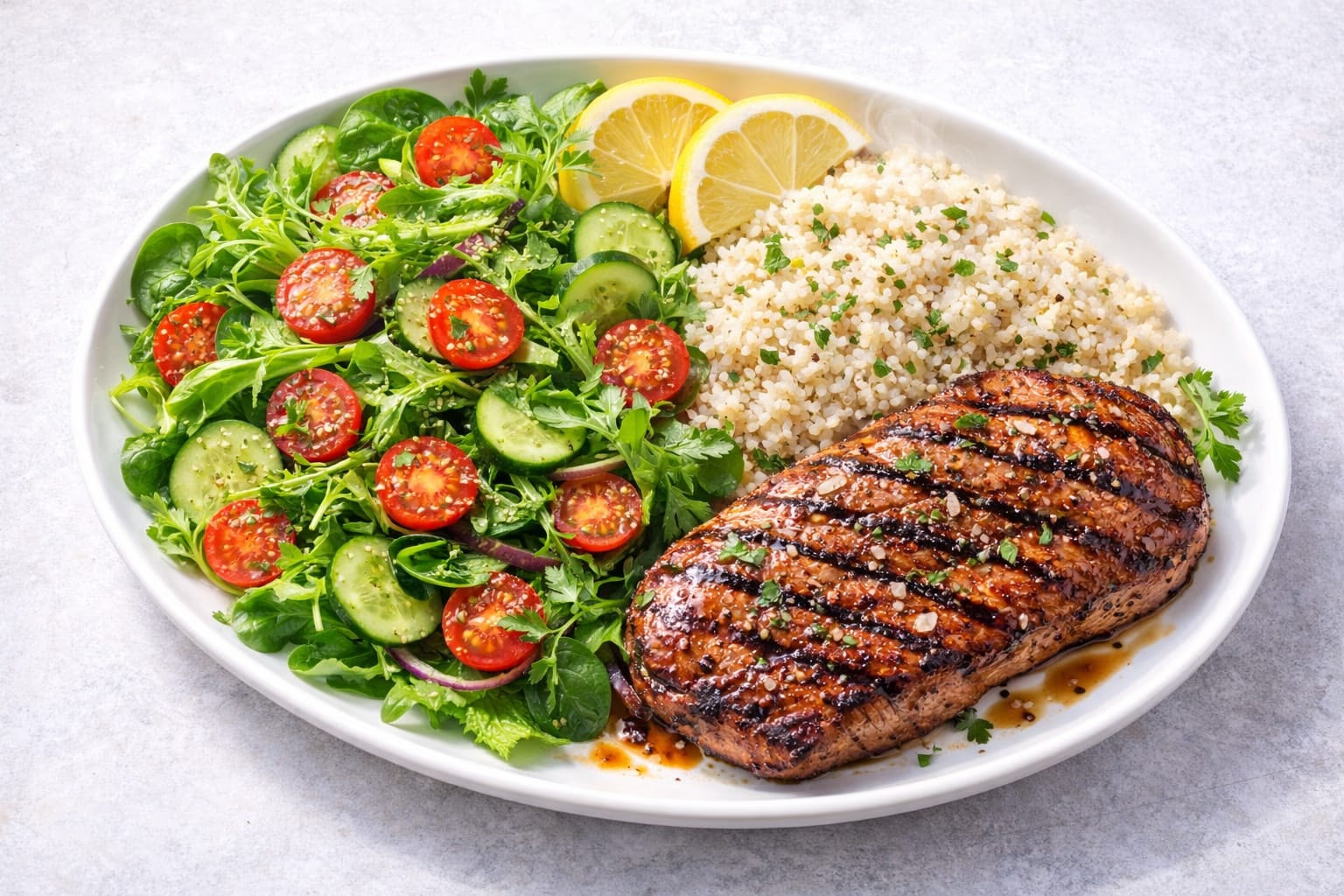
This reduces stress and makes shopping easy. For more detailed meal building, see our making meals guide.
The Lock In Protocol
Many diets fail because they are too strict, cutting out every favorite food until people give up. The Lock In philosophy is different: eat MORE healthy foods, not zero unhealthy ones. Flexible control of eating is linked to a lower BMI and a higher chance of successful weight loss than rigid, all-or-nothing dieting, so build in room for 2-3 less-than-perfect meals a week in small amounts. Start small: add protein and vegetables before you subtract anything, track your baseline for a few days without judgment, then keep meals simple with repeatable templates. Progress, not perfection.
Key Takeaways
- Calories come first. Manage energy balance before anything else.
- Prioritize protein. It protects muscle, burns calories, and keeps you full.
- Eat healthy carbs and fats. Vegetables, fruits, whole grains, and monounsaturated fats.
- Use the 80/20 rule. Eat healthy most of the time. Allow some junk 2-3 times a week.
- Start small. Add healthy foods first. Track your baseline. Keep meals simple.
Frequently Asked Questions
How many calories should I eat?
It depends on your size and activity level. Our calorie calculator works out your exact number. As a rough guide, women generally maintain weight on 1,800-2,200 calories. Men usually need 2,200-2,800. To lose fat, eat 300-500 calories less than maintenance. To build muscle, eat 200-300 calories more.
Can I still eat at restaurants?
Yes. Pick main dishes with grilled chicken or fish. Ask for veggies instead of fries. If the portion is huge, put half in a box right away.
Do I need to count macros?
For beginners, calories are most important. If you count calories and eat protein at every meal, you are 90% there. You can worry about exact macro ratios later.
References
- Halton, T. L., & Hu, F. B. (2004). The effects of high protein diets on thermogenesis, satiety and weight loss: a critical review. Journal of the American College of Nutrition, 23(5), 373–385.
- Calcagno, M., Kahleova, H., Alwarith, J., et al. (2019). The thermic effect of food: a review. Journal of the American College of Nutrition, 38(6), 547–551.
- Mifflin, M. D., St Jeor, S. T., Hill, L. A., et al. (1990). A new predictive equation for resting energy expenditure in healthy individuals. American Journal of Clinical Nutrition, 51(2), 241–247.
- Westenhoefer, J., Stunkard, A. J., & Pudel, V. (1999). Validation of the flexible and rigid control dimensions of dietary restraint. International Journal of Eating Disorders, 26(1), 53–64.
- Calorie restriction and metabolic health (PMC)
- Dietary protein: satiety, energetics, weight loss and health (Cambridge)
- Protein intake preserves lean body mass (PubMed)
- Caloric requirements and energy balance (PMC)
- Caloric deficit for weight loss (NCBI)
- Caloric surplus for muscle gain (PMC)
- Protein influences weight management and satiety
- Calorie deficit explained (Healthline)
- Whole grains and cardiovascular disease (PubMed)
- Whole grains support satiety compared with refined grains (PubMed)
- Phytonutrients from colorful vegetables (PMC)
- Monounsaturated fats, olive oil and cardiovascular risk (PMC)
- Trans fats and coronary heart disease (PMC)
- Flexible dieting vs rigid restriction (PubMed)
- Dietary adherence matters more than diet type for weight loss (PMC)
- Benefits of whole grains (Mayo Clinic)
- Monounsaturated fats explained (Healthline)
- Why trans fats are bad (Healthline)
- Tips for eating out (Healthline)