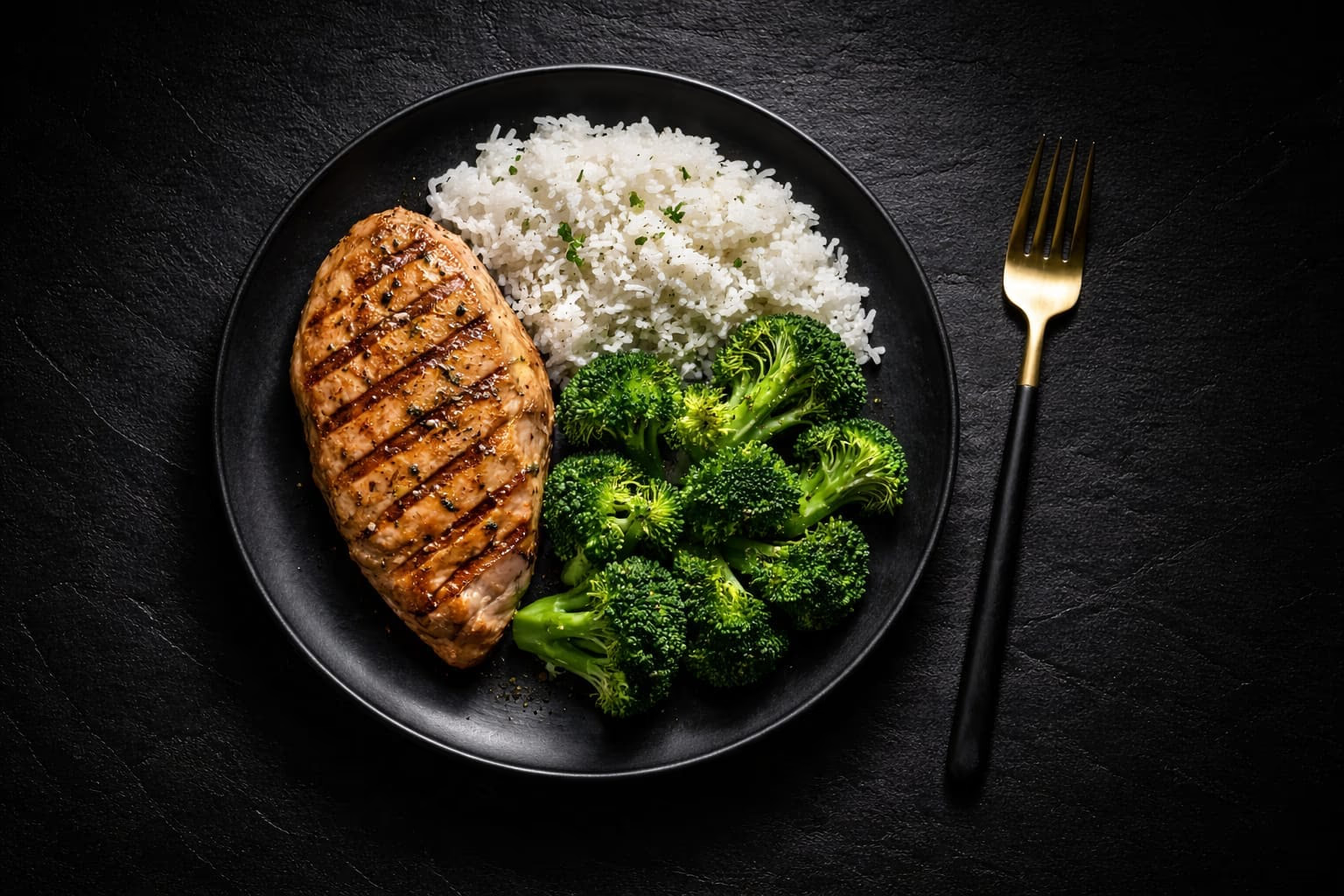
To build healthy eating habits that last, make eating a routine rather than a daily decision: eat 3 to 5 meals at roughly the same times each day, rotate a small set of simple ingredients, cook in bulk once a week, and adjust portions against that stable baseline to hit your goals.
Most people struggle with nutrition because they overcomplicate it — chasing trends and complex diets until they burn out. The durable fix is to reduce the number of food decisions you make. Cooking at home matters here: in a national survey, Wolfson and Bleich (2015, Public Health Nutrition) found that people who cooked dinner at home most days consumed fewer calories, less sugar, and less fat than those who cooked rarely. You do not need a degree in biology — just a routine that works. (This is general education, not medical advice.)
The core philosophy of our movement highlights a simple truth. Success is about doing the basics well. By turning your nutrition into a steady habit, you remove the stress of decision making. This allows you to focus on your purpose while your body gets exactly what it needs.
Here is a straightforward approach to mastering healthy eating habits and staying locked in on your goals.
Pillar 1: Build a Consistent Schedule
Your body loves rhythm. It runs on an internal clock that regulates digestion, hormones, and energy. In a scientific review of meal timing and the circadian system, St-Onge et al. (2017, Circulation, an American Heart Association statement) concluded that regular, structured meal timing is associated with better weight management and cardiometabolic markers, while erratic eating is linked to worse outcomes. When you eat at random times, you work against that clock — producing energy crashes and hunger spikes that destroy focus.
To build healthy eating habits, start with your schedule. The protocol suggests eating 3 to 5 meals per day. The exact number is up to you. The key is to pick a number and stick to it with discipline. If you decide on three meals, make sure you eat three meals every day.
You should also try to eat at the same times. For example:
- Breakfast at 7 am
- Lunch at 1 pm
- Dinner at 6 pm
Aim to eat within an hour of these times every day. This simple step trains your body to expect food at specific intervals. It stabilizes your blood sugar and ensures you have sustained energy levels throughout the day. You will find that you are less tempted to snack on junk food because your body knows when the next meal is coming.
Pillar 2: Keep Your Meals Simple
One of the biggest barriers to better health is decision fatigue. When you have to decide what to eat three times a day, it becomes exhausting. This is when discipline fades and people order takeout.
The solution is simplicity. We recommend choosing a few core ingredients and sticking to them. Select 2 to 4 types of proteins, vegetables, carbohydrates, and healthy fats that you enjoy. You do not need to be a chef to eat well.
- Proteins: Chicken, beef, eggs, or fish
- Carbs: Rice, potatoes, or oats
- Veggies: Broccoli, spinach, or peppers
- Fats: Avocado, nuts, or olive oil
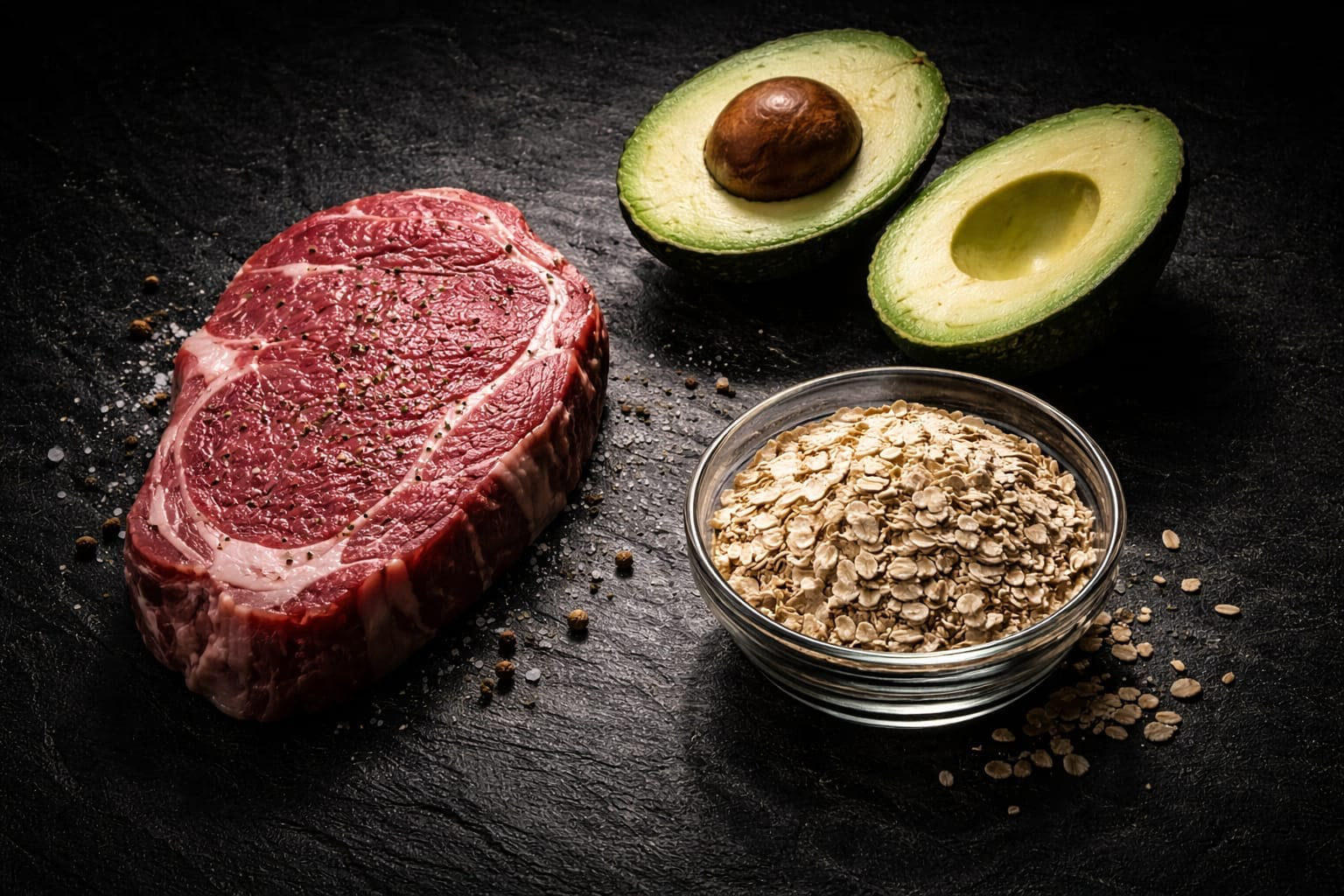
Mix these together to create balanced meals. To make this even easier, you must cook in bulk. Spend a few hours on Sunday preparing your proteins and carbs for the week.
When your food is ready to go, sticking to healthy eating habits becomes effortless. You simply heat up your container and eat. This saves time and ensures you always have a healthy option available. For detailed meal ideas, check out our making meals guide.
Pillar 3: Focus on Your Goals
Why should you follow a routine? Because it gives you control.
When your eating schedule and meal choices are consistent, you can easily track your progress. The goal is to reach a point where your daily food intake is very similar each day. This creates what we call a "manipulatable appearance."

- Want to lose weight? Slightly reduce your portion sizes. Because everything else is consistent, you will see results quickly.
- Want to gain muscle? Add a little more food. The baseline makes adjustments easy.
Without a baseline routine, you are just guessing. Learn more about adjusting your intake in our macro counting guide.
This approach also helps you become more mindful. You stop eating just because you are bored. You start paying attention to how food makes you feel. You will notice that healthy eating habits give you more focus and vitality. You are no longer controlled by cravings. You are in charge of your body.
The Lock In Protocol
Motivation gets you started. Habits keep you going. This is not about restricting yourself. It is about creating a lifestyle that supports your ambitions. The Protocol: pick your frequency (decide on 3 to 5 meals a day), set your times (choose eating hours like 7am, 1pm, 6pm and stick to them), simplify your shopping (buy the same 3 or 4 healthy ingredients every week), and execute (cook in bulk so you never have to guess what to eat). Treat your health with respect. Establish the routine. Trust the process. Watch how your body responds.
Key Takeaways
- Schedule your meals. Eat 3-5 times a day at consistent times to stabilize energy.
- Keep it simple. Pick 2-4 proteins, carbs, veggies, and fats you enjoy.
- Cook in bulk. Prep meals on Sunday so healthy options are always ready.
- Create a baseline. Consistent eating lets you easily adjust portions for your goals.
- Habits beat motivation. Build a routine that supports your long-term ambitions.
Frequently Asked Questions
Do healthy eating habits mean I have to eat bland food?
No. Simplicity does not mean lack of flavor. You can use spices, herbs, and hot sauces to make your meals taste great. The goal is to keep the main ingredients consistent while changing the flavor profile.
What if I miss a scheduled meal time?
It happens. If you miss your scheduled meal, just eat as soon as you can. The goal is consistency, not perfection. Do not stress about it. Just get back to your regular schedule for the next meal.
How do I handle social events or dinners out?
You can still enjoy social life while maintaining healthy eating habits. When you eat out, try to choose dishes that resemble your normal meals. Look for a simple protein with vegetables. Enjoy the company and return to your routine the next morning.
References
- St-Onge, M.-P., et al. (2017). Meal timing and frequency: implications for cardiovascular disease prevention. A scientific statement from the American Heart Association. Circulation, 135(9), e96–e121.
- Wolfson, J. A., & Bleich, S. N. (2015). Is cooking at home associated with better diet quality or weight-loss intention? Public Health Nutrition, 18(8), 1397–1406.
- Regular meal patterns, circadian rhythms and cardiometabolic health (PubMed)
- Meal timing and metabolic health (PMC)
- Decision fatigue: what it is and how to avoid it (Healthline)
- Meal frequency, weight loss and body composition, meta-analysis (PubMed)
- Meal prep guide (Harvard T.H. Chan School of Public Health)
- Meal planning and diet quality (PMC)
- Meal prep for beginners (Healthline)